Robot Vacuum Advantages in 2026: How To Tell What Matters
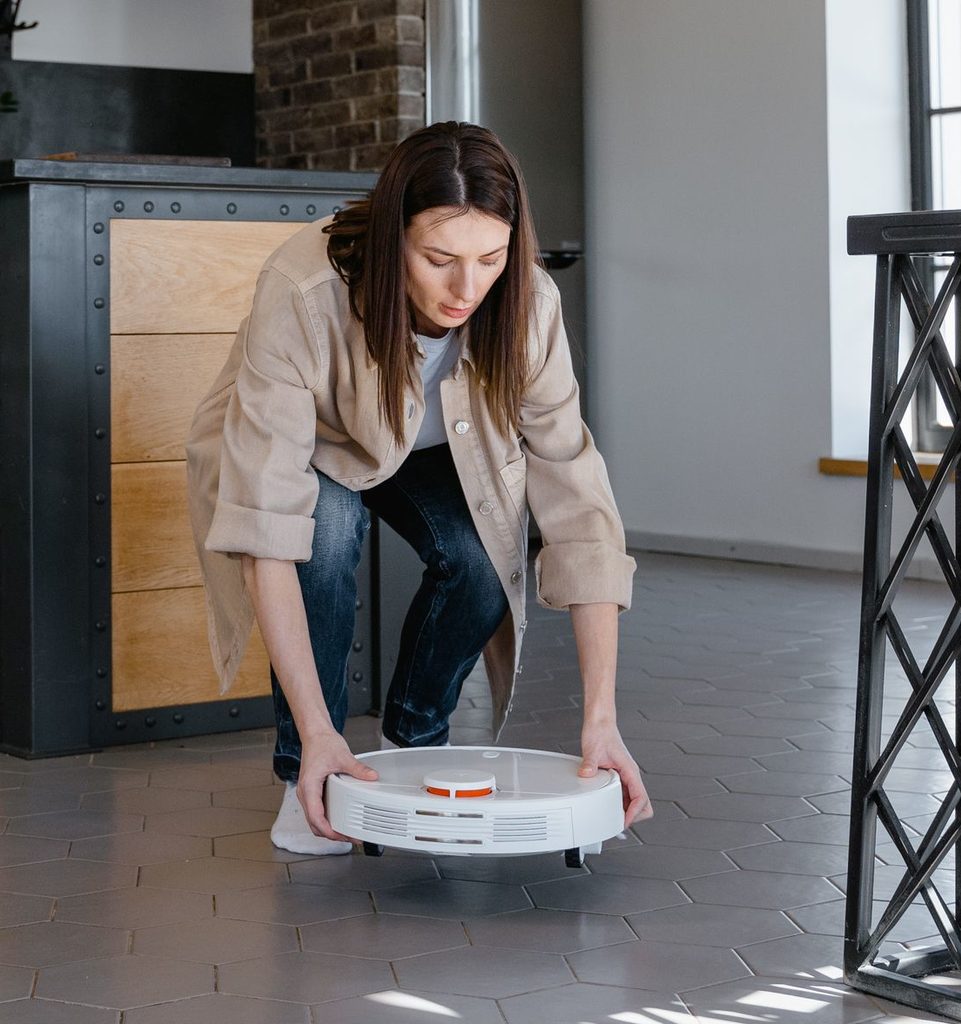
Robot vacuums are getting arms, climbing mechanisms, smarter obstacle avoidance and increasingly elaborate mops. The real question isn’t whether the technology is impressive. It’s whether the robot finally does enough work that you can stop finishing the job yourself.
THE SHORT VERSION
TL;DR
Modern robot vacuums are substantially better at navigating furniture, avoiding obstacles, crossing thresholds, cleaning edges and maintaining themselves than many older machines. But they still do not completely replace a regular vacuum, and more technology does not automatically mean better cleaning.
If your current robot already cleans your house without much intervention, keep it. If yours gets stuck, misses the dirty spots, struggles with thresholds or makes you finish the floor manually, some of the newest hardware is finally attacking those problems directly.
The rule we used throughout this guide is simple: if the fix works, the upgrade has to beat it.
Disclosure: As an Amazon Associate, I may earn from qualifying purchases and eligible program sign-ups. Some links in this article are affiliate links. They don’t cost you anything extra, and they don’t determine what we recommend.
START WITH THE PROBLEM
Which Robot Vacuum Problem Are You Trying to Fix?
- It misses dirt around chairs and furniture: See the MOVA V70 Ultra Complete
- It gets stuck on thresholds or household obstacles: See the MOVA MOBIUS 60
- You care more about hard-floor mopping than deep carpet: See the MOVA P50 Pro Ultra
- You want MOVA’s newest feature set: See what we know about the MOVA P70 Pro Ultra
- You want to know what a strong competitor can already do: See the Dreame X60 benchmark
- Your current robot works fine: Keep it
My Robot Vacuum Once Disappeared for Weeks
I have owned robot vacuums.
One of them got lost.
Not the app says it can’t find the dock lost. Actually lost.
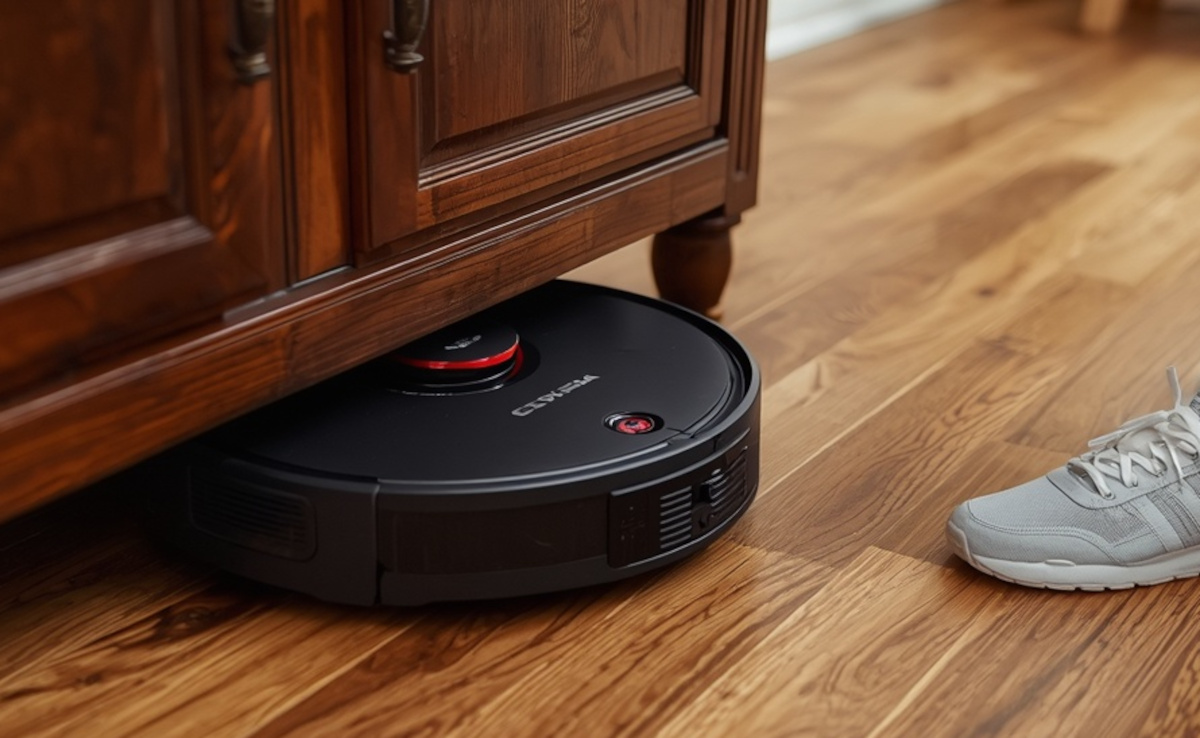
We eventually found it weeks later underneath the dining-room hutch, where it had apparently driven itself into exile and quietly died.
That wasn’t its only charming habit. It got stuck regularly and needed rescuing; it was loud enough to be annoying; it missed dirt around furniture, walls and corners. And the dogs sometimes treated its arrival like an invasion that needed to be barked at and chased out of the house.
The machine that was supposed to make vacuuming disappear had become another thing I had to manage.
A robot vacuum isn’t saving much work if you’re constantly helping the robot.
That’s why this generation is interesting.
Manufacturers aren’t merely adding another sensor and printing a larger suction number on the box. New robots are getting extending brushes, articulating mop arms, retractable climbing systems, lower profiles, better obstacle detection and docks that empty bins, wash mop pads and refill water.
Some are practically growing limbs.
The question isn’t whether that’s cool. It is whether those changes fix the reasons people stopped trusting robot vacuums in the first place.
Why We’re Looking Closely at MOVA
This is not a ranking of every robot vacuum on the market, and we’re not claiming MOVA makes the best robot vacuums.
We’re using several current MOVA models as a case study because the company’s newest machines attack many of the exact problems that have kept robot vacuums from feeling genuinely hands-off: furniture reach, thresholds, obstacle avoidance, carpet cleaning, pet hair, mopping and dock automation.
More importantly, several of these robots have now reached independent testers. That means we can compare what MOVA says the hardware should do with what happens when somebody actually puts the machine on a floor.
Focusing on one company should never mean grading that company on its own curve. That’s why you’ll also see the Dreame X60 Max Ultra Complete used later as an outside benchmark for what a strong premium competitor can already do.
OUR EVIDENCE STANDARD
How We Evaluated These Robot Vacuums
We did not personally lab-test these machines. What we did was compare controlled independent testing and measurements from Vacuum Wars and RTINGS with credible real-home reporting from outlets including The Verge and Tom’s Guide. We also reviewed specialist product-development coverage from Vacuum Nerds where it helped explain the newer hardware.
A trade-show demonstration is not treated as proof of real-world cleaning performance. Manufacturer specifications are useful for explaining how a feature is designed to work, but unless an independent source verifies the result, we label those specifications as manufacturer claims rather than proven performance.
MORE FROM TRENDPULSE
Recent Stories
More useful ideas, practical fixes and things worth knowing.
-
Vacuum Cleaner Guide: Which Type Is Right for Your Home?
Robot, cordless, upright or wet/dry? Here’s how to choose the vacuum that actually fits the cleaning…
-
Robot Vacuum Advantages in 2026: How To Tell What Matters
Robot vacuums are getting arms, climbing mechanisms, smarter obstacle avoidance and increasingly elaborate mops. The real…
-

5 Elementary School Backpacks + Easy Ways to Personalize Them
The Backpack Battle Is Over: 5 Smart Elementary School Backpacks Kids Can Make Their Own Finding…
Do You Even Need a Robot Vacuum?
Not everyone does.
If your floors stay reasonably clean and pulling out a regular vacuum once in a while doesn’t bother you, buying another machine to charge, clean and maintain isn’t automatically an upgrade.
Keep what you have.
The calculation changes when floor cleaning becomes repetitive. Pet hair is back a day after you vacuum. Crumbs collect around the dining table every night. Sand gets tracked through the house. Hard floors constantly show debris. Or you simply want routine floor maintenance happening while you do something else.
That’s the useful way to think about a robot vacuum. You’re not really buying a tiny vacuum.
You’re trying to remove a repetitive job.
Problem 1: Robot Vacuums Still Miss the Places That Get Dirty
Watch an older round robot approach a chair leg and you can see the geometry problem immediately. The robot can’t occupy the same space as the chair, so it turns away.
The crumbs stay there.
Corners, baseboards, furniture legs and narrow spaces have always exposed the limitations of a circular robot trying to clean a decidedly non-circular house.
MOVA V70 Ultra Complete: A Robot Vacuum That’s Growing an Arm
As an Amazon Associate, I may earn from qualifying purchases and eligible program sign-ups.
The V70 Ultra Complete attacks the reach problem physically. Its side brush extends outward and its mop sits on an articulating arm designed to reach well beyond the robot’s body.
That would be easy to dismiss as launch-day theater if we hadn’t now seen it used in a real home.
In an August 2026 hands-on report for The Verge, Jennifer Pattison Tuohy observed the V70 extending its cleaning hardware between and around kitchen stool legs and reaching underneath low furniture. That matters because physical reach attacks a physical limitation.
The evidence is still younger than it is for models such as the MOBIUS 60 or P50. This is credible hands-on reporting, not the same thing as months of comparative lab testing. Other V70 specifications should still be treated as MOVA claims unless independently verified.
As an Amazon Associate, I may earn from qualifying purchases and eligible program sign-ups.
Evidence: The Verge — MOVA V70 Ultra Complete hands-on
Problem 2: If You Have to Rescue It, Is It Really Automated?
Door tracks, thresholds, cords, toys, rug edges and awkward furniture bases can turn a scheduled cleaning run into another notification telling you the robot needs help.
Obstacle avoidance matters because the difference between cleaned while I was busy and stopped halfway across the house is the difference between automation and babysitting.
MOVA MOBIUS 60: Very Good at Getting Over Things, More Complicated Everywhere Else
As an Amazon Associate, I may earn from qualifying purchases and eligible program sign-ups.
The MOBIUS 60 uses retractable climbing hardware to lift its chassis over difficult transitions. That sounds excessive until the same threshold stops your robot every single day.
This is one of the MOVA models where we now have substantial independent evidence.
Vacuum Wars purchased the MOBIUS 60 and found exceptional threshold performance: it crossed a 51 mm single threshold in testing. It also avoided 22 of 24 obstacles, removed 88% of embedded sand in its carpet deep-clean evaluation and picked up 94% of flattened pet hair.
But the same testing also found slower-than-average navigation and weak battery efficiency, especially when the robot repeatedly returned to the dock to manage multiple mop pads.
Other reviewers have been less enthusiastic. RTINGS found strong obstacle avoidance and household adaptability but a more mixed overall cleaning picture. Tom’s Guide reported slow cleaning, noise, mopping streaks and frustrating real-world behavior.
Those results aren’t useless because they disagree. They’re useful because they disagree. Different test methods and different homes expose different strengths.
The clearest conclusion is that the MOBIUS 60 has unusually capable climbing and obstacle-avoidance hardware, but that does not automatically make it the best robot vacuum for every house.
TRENDPULSE VERDICT
Consider It — If Getting Stuck Is Your Problem
Who this is for: Thresholds, tracks and household obstacles repeatedly interrupt your robot’s cleaning runs.
When to skip it: Your home is relatively open, your current robot rarely gets stuck, or navigation efficiency and battery life matter more than elaborate climbing and mopping hardware.
As an Amazon Associate, I may earn from qualifying purchases and eligible program sign-ups.
Evidence: Vacuum Wars — MOBIUS 60 review · RTINGS — MOBIUS 60 review · Tom’s Guide — MOBIUS 60 review
Problem 3: A Bigger Robot Vacuum Suction Number Doesn’t Mean a Cleaner Floor
Manufacturers love Pascals.
The bigger number naturally sounds like the stronger vacuum.
But advertised suction isn’t the same thing as actual floor-cleaning performance. Brush design, agitation, airflow, floor contact, navigation, repeated passes and how effectively debris gets into the bin all matter.
MOVA P50 Pro Ultra: The Specification-Sheet Reality Check
As an Amazon Associate, I may earn from qualifying purchases and eligible program sign-ups.
The P50 Pro Ultra is one of the clearest examples we found of why advertised robot-vacuum specifications shouldn’t make the decision for you.
MOVA rates the P50 at 19,000 Pa. In Vacuum Wars’ bench testing, the P50 measured 0.71 kPa of suction versus 1.08 kPa for the lower-spec P10 Pro Ultra and a 0.83 kPa category average.
The difference showed up on carpet. The P50 removed 57% of embedded sand in Vacuum Wars’ deep-clean evaluation. The P10 removed 81%. The category average was 75%.
Flattened pet-hair performance was also below average in that test program.
A bigger advertised suction number does not automatically mean a cleaner carpet.
But the P50 Robot Vacuum and Mop Is Better at a Different Job
The same P50 that struggled in deep-carpet testing performed much better on dried-on stains in Vacuum Wars’ testing.
That’s why reducing these machines to one number — or even one overall score — can be misleading. A robot can be mediocre at embedded carpet dirt and still be useful for routine hard-floor maintenance and mopping.
RTINGS also treats the P50 as a stronger fit for some hard-floor uses than its headline specifications might suggest, while identifying other limitations in pickup and adaptability.
TRENDPULSE VERDICT
Only If Hard Floors and Mopping Matter More
Who this is for: You care substantially more about routine hard-floor maintenance and mopping than pulling deeply embedded dirt or pet hair from carpet.
When to skip it: Carpet deep cleaning is the main reason you’re replacing your current vacuum. The independent results don’t support choosing the P50 for that job.
As an Amazon Associate, I may earn from qualifying purchases and eligible program sign-ups.
Evidence: Vacuum Wars — MOVA P50 Pro Ultra review · RTINGS — MOVA P50 Pro Ultra review
Problem 4: The Dog Thinks Your Robot Vacuum Is an Intruder
This problem doesn’t show up prominently on many specification sheets.
The robot starts. The dog notices. Now your relaxing automated cleaning cycle has become a territorial dispute.
Better obstacle recognition can reduce collisions and erratic movement, but no robot vacuum can guarantee that your dog will decide the strange moving disc in the living room is harmless.
BEFORE YOU BUY
Try This First
Before replacing a functioning robot because the dog hates it, change when and where it runs. Schedule it while the dog is outside, on a walk, occupied elsewhere or resting in another part of the house.
A better routine may solve more than a more expensive robot.
Problem 5: New Robot Vacuum Technology Still Has to Prove Itself
The newest machine is always the easiest one to get excited about and the hardest one to judge fairly.
MOVA P70 Pro Ultra: Interesting, but Evidence Comes First
As an Amazon Associate, I may earn from qualifying purchases and eligible program sign-ups.
The P70 Pro Ultra belongs here because it represents the newest-feature problem perfectly.
MOVA’s published materials describe a high-spec robot vacuum and mop with newer cleaning and obstacle-recognition hardware. But at publication time, we do not have the same depth of independent performance evidence for the P70 that we now have for the MOBIUS 60 or P50.
That’s an important distinction.
A manufacturer specification tells us what a machine was designed to do. It does not tell us how consistently it will do it in your house.
TRENDPULSE VERDICT
Only If You Want the Newest Features
If the P70 addresses a specific problem you have and you’re comfortable buying newer technology before a larger body of independent evidence develops, consider it.
Otherwise, wait. The robot isn’t going anywhere.
As an Amazon Associate, I may earn from qualifying purchases and eligible program sign-ups.
Reality Check: What Happens When One Robot Already Solves Several of These Problems?
If MOVA is our case study, we still need something outside the brand to keep the comparison honest.
The Dreame X60 Max Ultra Complete is useful here because it attacks many of the same problems we’ve been talking about — and, unlike some of the newest MOVA models, it already has a substantial body of independent testing behind it.
This does not mean the Dreame automatically wins. It means it gives us something better than a manufacturer specification sheet to compare against.
The Benchmark: Dreame X60 Max Ultra Complete
Vacuum Wars independently purchased and tested the Dreame X60 Max Ultra Complete. What makes the X60 especially useful for this article is that it overlaps with several of the exact problems the MOVA machines are trying to solve.
PROBLEM-BY-PROBLEM COMPARISON
Where the Dreame X60 Fits Against the MOVA Models
If your problem is dirt around edges and furniture: The X60 also uses extending side-brush and mop hardware, so MOVA does not have the idea of physical reach to itself. The V70 is interesting because its articulating hardware goes after that problem aggressively, but the larger point is that extending beyond the robot’s round body is becoming a real premium-category solution rather than a MOVA-only trick.
If your problem is thresholds and getting stuck: The MOBIUS 60’s climbing system is one of its standout features, and Vacuum Wars measured exceptional threshold performance. But the X60 also handled a 51 mm single threshold in testing. That matters because it tells us threshold climbing is no longer just an experimental feature — strong competitors can already do it well.
If your problem is carpet or pet hair: This is where the comparison gets more revealing. The P50’s huge advertised suction figure did not translate into strong carpet deep-cleaning performance in Vacuum Wars’ testing. The X60, by contrast, removed 89% of embedded sand in that test program and picked up 100% of flattened pet hair.
That does not mean the X60 is universally better than the P50. The P50 makes a stronger case when hard-floor mopping is the job you care about most. But it reinforces one of the most important lessons in this article: buy the performance that solves your problem, not the biggest number on the box.
If your problem is wanting the newest technology: The P70 may ultimately prove excellent, but much of its case still rests on manufacturer claims because independent evidence is limited. The X60 is the opposite: less mystery, more evidence.
The Catch: Stronger Evidence Comes at a Much Higher Price
The X60 gives us a strong benchmark because it already performs well across several of the problems newer MOVA machines are trying to solve. But there is an important catch: it can cost substantially more than the MOVA options we are discussing.
That changes the comparison. The Dreame does not need to be merely better. It needs to be enough better to justify the additional spend.
If one particular annoyance is what makes your current robot frustrating, a MOVA model aimed directly at that problem may make more sense. If you are replacing an older robot and want one machine with strong independent evidence across carpet, pet hair, obstacles, thresholds and edge cleaning, the X60 gives you a more proven all-around option — at a premium.
THE VALUE QUESTION
If It Costs More, It Has to Beat the Fix by Enough to Matter
That is the same rule we are applying everywhere else in this article. A more expensive robot does not earn the upgrade simply because it wins more tests. The extra performance has to solve enough of your problems to justify the extra cost.
So Does the Dreame Beat the MOVA Models?
Not exactly. That is not what this comparison is meant to prove.
- V70: strongest case when furniture reach and edge cleaning are the problem you actually want solved.
- MOBIUS 60: strongest case when thresholds and obstacle-heavy rooms keep stopping your current robot.
- P50: better fit when routine hard-floor maintenance and mopping matter more than deep carpet performance.
- P70: newest MOVA feature set, but with less independent performance evidence so far.
- Dreame X60: strongest all-around independent evidence across several of those same problem areas, but at a substantially higher cost.
TRENDPULSE REALITY CHECK
A Better Benchmark — Not an Automatic Better Buy
The X60 raises the standard for every product in this article. MOVA does not get credit just because a robot can climb a threshold, extend a brush or advertise enormous suction. The question is whether that feature actually saves you work — and whether another machine already does the same job better.
But the Dreame has to clear one more hurdle: value. If a less-expensive MOVA model solves the specific problem that annoys you, paying substantially more for broader performance may not make sense.
As an Amazon Associate, I may earn from qualifying purchases and eligible program sign-ups.
Evidence: Vacuum Wars — Dreame X60 Max Ultra Complete review · Vacuum Wars — current 2026 robot vacuum rankings
But Who Is MOVA?
That’s a reasonable question, especially when you’re considering relatively new and expensive cleaning technology. What matters to us isn’t whether the marketing looks convincing. It’s whether independent reviewers can obtain the products, test them and find strengths and weaknesses.
That is now happening. Vacuum Wars and RTINGS have independently tested multiple MOVA models. The Verge has used the V70 in a real home. Tom’s Guide has published a decidedly more critical MOBIUS 60 review.
Vacuum Nerds’ CES coverage also helps establish the development timeline for MOVA’s current generation of climbing, extending and more mechanically ambitious hardware. We use that as technology context, not as proof of cleaning performance.
That mixed record is more useful than manufactured social proof. The MOBIUS has genuine strengths and genuine weaknesses. So does the P50. The V70 has an intriguing physical solution that still needs more comparative evidence. The P70 needs more proof.
Judge the model, the problem and the evidence — not the logo.
Can a Robot Vacuum Replace a Regular Vacuum?
Probably not completely.
Not yet.
Stairs, upholstery, deep carpet, awkward spaces, occasional heavy cleaning and places a floor robot simply can’t reach still give a regular vacuum plenty to do.
But complete replacement may be the wrong standard.
A dishwasher doesn’t eliminate every reason to wash something in the sink. That doesn’t make the dishwasher useless.
A good robot vacuum can work the same way. Its value isn’t necessarily that you never vacuum again. Its value is that you vacuum less often because repetitive maintenance cleaning happens without you.
How Often Does the Robot Make You Finish Its Job?
- Dirt around furniture and edges? The V70’s extending hardware directly attacks the reach problem.
- Thresholds and obstacles stop the run? The MOBIUS 60 has strong independent evidence for climbing and obstacle avoidance, although the overall ownership picture includes tradeoffs.
- Mostly hard floors and routine mopping? The P50 makes more sense there than it does as a carpet deep-cleaning upgrade.
- Want MOVA’s newest automation? The P70 may be interesting, but more of the performance case still needs independent proof.
- Want to know what premium competition looks like? The Dreame X60 shows how high the current bar already is.
Your Current Robot Vacuum Works? Keep What You Have.
Seriously.
There will always be another robot with another arm, another sensor and another enormous number printed beside the word suction.
None of those is an upgrade unless it removes a problem you already have.
That’s the same principle we use elsewhere at TrendPulse: try the sensible fix before replacing something that still works.
And if you’ve never owned a robot vacuum, don’t start by asking which one has the most features.
Look at your floor. At how often you’re cleaning it. And Look at the part of that job that keeps coming back.
What job would I like to stop doing?
That’s the problem worth buying a robot to solve.
Robot Vacuum Questions, Answered
Are robot vacuums actually worth it?
They can be when they remove repetitive floor maintenance without requiring constant rescue or preparation. If your current cleaning routine isn’t a burden, buying another machine isn’t automatically worthwhile.
Can a robot vacuum replace a regular vacuum?
Not completely for most homes. Robot vacuums are best at routine floor maintenance. Stairs, furniture, deep cleaning and inaccessible areas still require another cleaning tool.
Why does my robot vacuum keep getting stuck?
Common trouble spots include thresholds, door tracks, cords, toys, tassels, low furniture and unusual furniture bases. Better obstacle detection and climbing hardware can reduce intervention, but room layout still matters.
Is higher Pa suction always better?
No. Advertised Pa is only one specification. Independent testing of the MOVA P50 and P10 provides a useful example: the higher advertised suction figure did not translate into better measured suction or better carpet deep-clean performance.
Are robot vacuums good for pet hair?
Some are substantially better than others. Brush design, anti-tangle performance and carpet pickup matter as much as headline suction. Independent pet-hair testing is more useful than assuming every high-powered robot will handle shedding well.
Do robot vacuum mops actually work?
They can be useful for routine hard-floor maintenance, but results vary widely on dried-on stains and streaking. A sophisticated mop mechanism does not guarantee better cleaning, so independent stain testing matters.
Sources & Further Reading
- Vacuum Wars — Robot Vacuum Testing Hub
- Vacuum Wars — MOVA MOBIUS 60 Review
- RTINGS — MOVA MOBIUS 60 Review
- Tom’s Guide — MOVA MOBIUS 60 Review
- Vacuum Wars — MOVA P50 Pro Ultra Review
- RTINGS — MOVA P50 Pro Ultra Review
- The Verge — MOVA V70 Ultra Complete Hands-On
- Vacuum Wars — Dreame X60 Max Ultra Complete Review
- Vacuum Wars — Current 2026 Robot Vacuum Rankings
- Vacuum Nerds — MOVA at CES 2026
Research checked August 26, 2026. Robot-vacuum rankings and test results can change as new models and updated testing are published.
A big shout out to Pexels and the creators for the images in this article.